Packaging Recyclability Under PPWR: 2030 Readiness
Packaging recyclability is becoming one of the most important market access requirements for companies selling packaged products in the European Union. Under the EU Packaging and Packaging Waste Regulation, known as the PPWR, companies can no longer rely on broad or vague statements such as “recyclable packaging” without evidence.
The new rules move packaging compliance from a general sustainability claim to a measurable compliance requirement. Businesses must understand whether packaging is designed for recycling, can be collected and sorted, can produce quality secondary raw materials, and can be recycled at scale.
Regulation (EU) 2025/40 on packaging and packaging waste entered into force on 11 February 2025 and will generally apply from 12 August 2026. It sets rules for packaging across production, use, waste management, reuse, recycling, labelling, recycled content, and waste prevention.
For manufacturers, importers, retailers, distributors, packaging suppliers, brand owners, and compliance teams, this means recyclability must be managed early in the packaging design process. It affects material selection, packaging components, labels, adhesives, closures, coatings, inks, supplier evidence, technical documentation, EPR fees, and future market access.
The attached packaging workshop identifies recyclability as a core PPWR compliance area, covering design for recycling, efficient collection, proper sorting, quality secondary materials, recyclability at scale, recyclability performance grades, technical documentation, exemptions, and EPR fee modulation.
Why Packaging Recyclability Matters Under PPWR
Packaging recyclability matters because the PPWR is designed to make packaging more circular and reduce packaging waste. The European Commission states that the Packaging and Packaging Waste Regulation is intended to reduce packaging waste, improve recyclability, increase recycled content, and support more sustainable packaging across the EU market.
For companies, this creates a direct business impact. Packaging that does not meet recyclability requirements may create:
- Product launch delays
- Packaging redesign costs
- Missing compliance evidence
- Higher EPR fees
- Incorrect recyclability claims
- Customer or retailer rejection
- Marketplace compliance issues
- Regulatory non-compliance risk
- Future market access restrictions
Packaging recyclability is therefore not only a sustainability objective. It is a product compliance and market access requirement.
A product can be compliant in terms of safety, chemical restrictions, and performance, but still face market access problems if its packaging does not meet recyclability requirements or if the company cannot prove that it does.
What Does “Recyclable Packaging” Mean Under PPWR?
Under PPWR, recyclable packaging is not simply packaging made from a material that can theoretically be recycled. It must meet practical recyclability conditions.
The official EUR-Lex summary explains that all packaging must be recyclable, meaning it must be designed for material recycling and able to be collected, sorted, and recycled at scale when it becomes waste. It also confirms that recycled-at-scale requirements enter into force in 2035 and that recyclability performance grades apply from 2030.
The workshop breaks this down into five practical recyclability criteria:
|
Recyclability Criterion |
Practical Meaning |
|
Designed for recycling |
Packaging must be created with recycling in mind, including material selection and component design |
|
Efficiently collected |
Packaging must be compatible with collection systems and not lost in mixed waste streams |
|
Properly sorted |
Packaging must be sortable into the correct recycling stream without contaminating other streams |
|
Produces quality secondary materials |
Recycling should produce material that can replace primary raw materials |
|
Recycled at scale |
Recycling must be possible widely across the market, not only in a laboratory or pilot facility |
This definition is important because many packaging formats are described as recyclable in theory but are difficult to recycle in practice. Examples can include complex multilayer packaging, packaging with incompatible adhesives, difficult-to-remove labels, problematic coatings, small components, dark pigments, mixed material structures, or packaging that is not widely collected in the target market.
PPWR Recyclability Timeline: What Businesses Need to Know
PPWR recyclability requirements are phased in over time. Companies should prepare before the deadlines because packaging redesign, supplier qualification, testing, documentation, artwork updates, and customer approvals can take months or years.
|
Date |
Recyclability Relevance |
|
11 February 2025 |
Regulation (EU) 2025/40 entered into force |
|
12 August 2026 |
General PPWR application date |
|
1 January 2030 |
Packaging must meet design-for-recycling requirements |
|
2030 |
Recyclability performance grades apply |
|
1 January 2035 |
Packaging must also meet recyclability-at-scale requirements |
|
2038 |
Stricter recyclability obligations apply under the regulation |
The workshop explains that from 1 January 2030, packaging must follow EU design-for-recycling rules, while from 1 January 2035 packaging must also meet recyclability-at-scale requirements. It also notes that these rules are intended to ensure packaging is not only theoretically recyclable, but practically recyclable with existing or soon-to-exist infrastructure.
For companies, the practical message is simple: 2030 packaging decisions start now. Packaging placed on the market in 2030 may be based on design decisions, supplier contracts, packaging lines, and artwork choices made years earlier.
Design for Recycling: The 2030 Requirement
Design for recycling means packaging should be intentionally designed to fit recycling systems. It should avoid features that prevent collection, sorting, separation, or reprocessing.
The workshop explains that starting from 1 January 2030, packaging must follow design-for-recycling rules set by the EU. If packaging meets these rules, it fulfills the “designed for recycling” requirement.
Design-for-recycling factors to review
|
Design Area |
Questions to Ask |
|
Material choice |
Is the packaging made from a material that is widely collected and recycled? |
|
Material combinations |
Are multiple materials easy to separate, or do they create recycling problems? |
|
Labels and sleeves |
Do labels, sleeves, inks, or adhesives interfere with sorting or reprocessing? |
|
Closures and caps |
Are closures compatible with the main recycling stream? |
|
Coatings and barriers |
Do coatings prevent recycling or reduce secondary material quality? |
|
Pigments and colors |
Could pigments interfere with optical sorting or material recovery? |
|
Size and shape |
Is the packaging too small or irregular to be captured during sorting? |
|
Residue and contamination |
Could product residue reduce recyclability or contaminate recycling streams? |
|
Additives and substances |
Are Substances of Concern present in a way that affects recycling? |
|
Component compatibility |
Are all integrated or separate components compatible with recycling? |
Design for recycling is not only a technical exercise. It requires cooperation between packaging engineering, procurement, suppliers, compliance, sustainability, marketing, and quality teams.
A packaging design that looks attractive or protects the product well may still create recycling challenges if it uses incompatible components, unnecessary coatings, or complex material structures.
Recyclability at Scale: The 2035 Requirement
Recyclability at scale means the packaging can be recycled in real recycling systems at market scale. It is not enough for packaging to be recyclable in theory, in a laboratory, or by a single specialist recycler.
The workshop explains that from 1 January 2035, the infrastructure and technology must exist to recycle the packaging type widely across the market.
This distinction matters because many packaging designs are technically recyclable but not practically recyclable in the countries where they are sold. For example, a packaging format may be recyclable in one Member State but not widely collected or sorted in another. A company selling across multiple EU markets must therefore consider actual recycling infrastructure and not only material theory.
Practical questions for recyclability at scale
|
Question |
Why It Matters |
|
Is the packaging collected in the markets where it is sold? |
Collection is the first step before recycling |
|
Can the packaging be detected and sorted correctly? |
Sorting failure can remove packaging from recycling streams |
|
Is recycling infrastructure available at market scale? |
Pilot recycling is not enough for long-term compliance |
|
Does recycling produce usable output? |
Poor output quality can reduce circularity value |
|
Are local recycling rates and systems documented? |
Evidence may be needed for compliance and EPR decisions |
|
Does the packaging affect other materials in the stream? |
Contamination can reduce recyclability of other packaging |
Companies should build recyclability-at-scale monitoring into their packaging compliance process. This is especially important for companies selling across many EU markets or using newer packaging materials.
Recyclability Performance Grades: A to E
The PPWR introduces a performance-based approach to recyclability. Packaging will be assessed using recyclability performance grades, commonly understood as grades A to E.
The workshop explains that the EU will assign recyclability performance grades based on how much of the packaging by weight can be successfully recycled. It also states that Grade D or E packaging, below 70% recyclable, is not considered recyclable after 1 January 2030, meaning such packaging may become non-compliant.
Practical interpretation of recyclability grades
|
Grade |
Practical Meaning for Businesses |
|
Grade A |
Strong recyclability performance and lower compliance risk |
|
Grade B |
Good recyclability performance, but still needs supporting evidence |
|
Grade C |
Minimum acceptable recyclability level during the relevant phase |
|
Grade D |
High-risk recyclability level and likely not acceptable after key deadlines |
|
Grade E |
Non-compliant or very high-risk recyclability performance |
Official EU information confirms that recyclability performance grades apply from 2030 and that stricter recyclability obligations apply from 2038.
For companies, the practical goal should not be to barely meet the lowest acceptable level. Packaging portfolios should be reviewed with a view to improving recyclability performance before deadlines. Packaging that only just meets minimum requirements may become a future redesign risk as rules tighten.
Why Recyclability Grades Matter for EPR Fees
Recyclability grades are not only about compliance. They are also connected to cost.
The workshop explains that under Extended Producer Responsibility rules, producers will pay fees based on how easily recyclable their packaging is. Packaging that is easier to recycle and receives a higher performance grade will generally lead to lower fees.
This is sometimes referred to as fee modulation or eco-modulation. The business logic is simple: packaging that is harder to collect, sort, and recycle may create higher waste management costs, while packaging that is easier to recycle may be rewarded with lower fees.
Business impact of recyclability grades
|
Area |
Impact |
|
Product cost |
EPR fees may increase for harder-to-recycle packaging |
|
Packaging design |
Design teams may need to prioritize recyclable formats |
|
Procurement |
Suppliers may need to provide recyclability evidence |
|
Sustainability reporting |
Recyclability performance can support circularity claims |
|
Sales and customers |
Retailers may request proof of recyclable packaging |
|
Market access |
Poor recyclability may create compliance risk from 2030 onward |
Companies should not wait for EPR fees to increase before reviewing packaging recyclability. A proactive redesign plan can reduce future costs and support better compliance readiness.
What Packaging Types Should Be Reviewed First?
Companies should not try to review all packaging in the same way at the same time. A risk-based approach is more practical.
Start with packaging that is high volume, complex, plastic-based, multi-material, consumer-facing, or used in many markets. These packaging types are more likely to create compliance, EPR, and redesign challenges.
High-priority packaging for recyclability review
|
Packaging Type |
Why It Should Be Prioritized |
|
Plastic packaging |
Often subject to recyclability and recycled content scrutiny |
|
Multi-material packaging |
May be difficult to separate or sort |
|
Flexible films |
Can face collection and sorting challenges |
|
Full-body sleeves |
May affect sorting and material identification |
|
Black or dark plastics |
Can create optical sorting difficulties depending on material and system |
|
Coated paper or board |
Coatings may affect fiber recovery |
|
Small packaging components |
May be lost during sorting |
|
Food-contact packaging |
May have residue, coatings, barriers, or substance considerations |
|
E-commerce packaging |
High volume and often connected to empty space and material efficiency |
|
Packaging with adhesives or labels |
Adhesives and labels may affect reprocessing |
A practical first step is to classify packaging by material type, component structure, annual volume, markets placed on, and current evidence availability.
Common Design Features That Can Reduce Recyclability
Packaging recyclability depends on the full packaging unit, not only the main material. Labels, inks, closures, coatings, adhesives, barriers, and product residues can all affect the assessment.
Common recyclability risk factors
|
Risk Factor |
Why It Can Be a Problem |
|
Mixed materials that cannot be separated |
Can reduce sorting and recycling efficiency |
|
Incompatible adhesives |
May contaminate recycling output or prevent separation |
|
Full-body shrink sleeves |
Can prevent correct material identification |
|
Problematic pigments |
May interfere with sorting technology |
|
Metallized layers |
Can reduce recyclability of plastic or paper-based formats |
|
Barrier coatings |
May affect fiber recovery or plastic recycling |
|
Small components |
May be lost in sorting or contaminate streams |
|
Product residue |
Can reduce recycling quality |
|
Non-removable labels |
May affect sorting or reprocessing |
|
Substances of Concern |
May affect safe recycling and secondary material quality |
The workshop specifically highlights that technical documentation should explain how the packaging is designed for recycling, including material combinations, adhesives, closures, and related design details.
The key point for compliance teams is that recyclability must be assessed at packaging-unit level. A bottle, cap, label, adhesive, ink, coating, sleeve, and closure may all need to be considered together.
Recyclability and Technical Documentation
Recyclability must be supported by technical documentation. The company should be able to prove how it assessed packaging and why it concluded that the packaging is recyclable.
The workshop states that producers must keep technical documentation to prove packaging meets all recycling criteria and that this documentation must show the packaging is designed for recycling and can be recycled at scale. It also identifies evidence such as drawings, design details, standards used, recyclability assessments, test reports, laboratory data, and third-party certification results.
What to include in a recyclability technical file
|
Documentation Element |
What It Should Show |
|
Packaging description |
What the packaging is and how it is used |
|
Material composition |
Main material and all relevant components |
|
Packaging drawings |
Structure, components, closures, labels, coatings and dimensions |
|
Design-for-recycling explanation |
Why the design supports recycling |
|
Standards and specifications |
Standards, guidance or methods used for assessment |
|
Recyclability performance grade |
Grade or assessment outcome where available |
|
Sorting and collection evidence |
Evidence that packaging can enter the correct waste stream |
|
Reprocessing evidence |
Test reports, lab data or third-party assessment where relevant |
|
At-scale evidence |
Evidence of recycling infrastructure when required |
|
Component compatibility |
Evidence that components do not disrupt recycling |
|
Declaration of Conformity |
Formal compliance declaration where applicable |
Technical documentation should be controlled, versioned, and updated when the packaging changes. A new label, supplier, adhesive, coating, resin, paper grade, closure, or print process can change the recyclability profile.
Innovative Packaging and Temporary Exemptions
Innovation remains important under the PPWR, but innovative packaging should still be documented carefully.
The workshop notes that until 2035, innovative packaging that does not fully meet recyclability criteria may still enter the market for up to five years if it truly offers new solutions. It must have documentation proving that it is innovative and explaining its limitations.
This point matters for companies developing new materials, refill formats, smart packaging, barrier solutions, or alternative packaging systems. Innovation should not be blocked, but it must be supported by evidence.
What innovative packaging documentation should explain
|
Evidence Area |
Practical Purpose |
|
Why the packaging is innovative |
Shows that it is not simply a conventional non-recyclable format |
|
What problem it solves |
Explains sustainability, safety, functionality or circularity benefit |
|
Why full compliance is not yet possible |
Clarifies technical or infrastructure limitations |
|
Recycling limitations |
Shows transparency about current recycling challenges |
|
Improvement plan |
Demonstrates a pathway toward future compliance |
|
Supporting evidence |
Includes tests, supplier data, pilots or technical analysis |
Businesses should avoid using “innovation” as a substitute for recyclability. It should be treated as a specific evidence-based exception, not a general justification.
Special Exemptions Until 31 December 2034
Some sensitive packaging types may need additional time because of safety, healthcare, or product quality requirements.
The workshop notes that certain sensitive packaging types, such as immediate packaging for medicines and plastic packaging for medical devices and in vitro diagnostics, are exempt from recyclability rules until 31 December 2034.
This is important for healthcare, pharmaceutical, and medical device companies because packaging must often meet strict safety, sterility, stability, and product protection requirements.
However, exemptions should not be treated casually. Companies should document:
- Which exemption applies
- Which packaging type is covered
- Why the packaging falls within the exemption
- What evidence supports the exemption
- Whether alternative packaging designs are being monitored
- How the company will reassess packaging before the exemption period ends
Even exempt packaging should be managed in a compliance system so that the business can prove why the exemption was applied.
Recyclability and Compostable Packaging
Compostable packaging is not automatically the same as recyclable packaging. Under the PPWR, certain packaging types must be compostable, while other packaging should prioritize material recycling and avoid disrupting recycling streams.
The workshop explains that certain types of packaging must be compostable in industrial facilities, including tea bags, single-serve coffee pods or capsules, sticky labels attached to fruit and vegetables, and very lightweight plastic bags. It also states that other packaging, including biodegradable plastics, must allow material recycling and must not disrupt the recycling of other waste materials.
Practical business message
Companies should not assume that switching to biodegradable or compostable materials automatically improves compliance. In many cases, the question is whether the packaging should be recyclable, compostable, reusable, or redesigned.
A compostable claim should be supported by evidence and should not confuse consumers or contaminate conventional recycling streams.
Recyclability and Packaging Minimization
Recyclability should be assessed together with packaging minimization. A package may be recyclable but still excessive, oversized, or unnecessarily complex.
The workshop explains that packaging should be designed to use the fewest materials, weight, and volume needed to protect and contain the product. It also notes that companies must provide technical documentation showing how packaging was minimized, including standards or methods used, reasons weight or volume could not be reduced further, and test results or studies supporting the design.
This creates an important balance. Packaging should be:
- Recyclable
- Protective
- Minimal
- Functional
- Safe
- Supported by evidence
For example, reducing material too much may damage product protection, while adding unnecessary layers may harm minimization and recyclability. Packaging teams should document why the chosen design is necessary and how it supports both protection and circularity.
Recycling Targets and Material-Specific Tracking
Packaging recyclability is also connected to broader recycling targets. The workshop includes material-specific recycling targets for packaging waste.
Recycling targets highlighted in the workshop
|
Deadline |
All Packaging Waste |
Plastic |
Wood |
Ferrous Metals |
Aluminium |
Glass |
Paper & Cardboard |
|
By 31 December 2025 |
65% |
50% |
25% |
70% |
50% |
70% |
75% |
|
By 31 December 2030 |
70% |
55% |
30% |
80% |
60% |
75% |
85% |
The workshop also notes that these percentages apply to the weight of packaging waste generated, and that composite packaging and other multi-material formats must be calculated per material except where a material is insignificant, below 5% by mass. It also highlights that quality control and traceability systems are required to confirm sorting and recycling.
For companies, this means packaging data should be collected by material and component. A general statement such as “cardboard box with plastic window” is not enough. Businesses need material breakdowns, weights, and evidence that can support reporting and recyclability assessments.
How to Build a PPWR Recyclability Readiness Process
A practical PPWR recyclability process should be structured, documented, and connected to product development.
Step 1: Build a packaging inventory
Create a list of all packaging used across the business. Include sales packaging, grouped packaging, transport packaging, e-commerce packaging, service packaging, reusable packaging, and packaging components.
Step 2: Map packaging to products and markets
Connect each packaging item to the product, SKU, supplier, and EU markets where it is placed.
Step 3: Classify packaging materials
Identify whether the packaging is plastic, paper, cardboard, glass, metal, wood, composite, flexible, rigid, coated, or multi-material.
Step 4: Identify components
Document labels, sleeves, closures, caps, adhesives, inks, coatings, windows, barriers, inserts, and other components.
Step 5: Assess design-for-recycling risks
Check whether the packaging contains features that may interfere with collection, sorting, or recycling.
Step 6: Request supplier evidence
Ask suppliers for material composition, recyclability assessments, test results, declarations, and design-for-recycling evidence.
Step 7: Assign a recyclability status
Use available guidance, supplier evidence, standards, or assessment methods to classify packaging status and identify risk.
Step 8: Prepare technical documentation
Store evidence in a structured technical file that can be reviewed, updated, and shared when required.
Step 9: Prioritize redesign
Start with high-volume, high-risk, plastic, multi-material, or consumer-facing packaging.
Step 10: Monitor PPWR updates
Track delegated acts, implementing acts, harmonized standards, guidance, and country-level expectations as they develop.
Practical Recyclability Checklist for Compliance Teams
|
Question |
Status |
|
Have all packaging formats been listed? |
To be checked |
|
Is each packaging item linked to products and markets? |
To be checked |
|
Is the material composition known? |
To be checked |
|
Are all components identified? |
To be checked |
|
Are labels, adhesives, coatings and closures assessed? |
To be checked |
|
Is the packaging designed for recycling? |
To be checked |
|
Can the packaging be collected and sorted? |
To be checked |
|
Is there evidence of recycling output quality? |
To be checked |
|
Is recyclability-at-scale evidence available or planned? |
To be checked |
|
Is a recyclability performance grade available? |
To be checked |
|
Is technical documentation complete? |
To be checked |
|
Has the packaging been reviewed for EPR fee impact? |
To be checked |
|
Is redesign needed before 2030? |
To be checked |
This checklist should be used during packaging design, supplier onboarding, product launches, packaging changes, and annual compliance reviews.
Common Mistakes Companies Should Avoid
Many recyclability compliance issues happen because companies rely on assumptions instead of evidence.
|
Mistake |
Why It Creates Risk |
|
Assuming material recyclability equals packaging recyclability |
The full packaging unit must be assessed |
|
Ignoring labels and adhesives |
Components can disrupt sorting or reprocessing |
|
Treating claims as marketing decisions only |
Recyclability claims must be supported |
|
Not tracking component weights |
Performance grades may depend on weight-based assessment |
|
Ignoring country-level infrastructure |
Recyclability may vary across markets |
|
Waiting until 2030 |
Redesign and supplier changes take time |
|
Not updating technical files |
Packaging changes may affect compliance |
|
Failing to assess EPR fee impact |
Poor recyclability may increase costs |
|
Overlooking Substances of Concern |
Substances can affect recycling quality and safety |
|
Using compostability as a default solution |
Compostability is not always the correct compliance route |
How ComplyMarket Supports Packaging Recyclability Under PPWR
Packaging recyclability under PPWR is a data-intensive compliance challenge. Companies need to connect packaging items, materials, suppliers, components, countries, recyclability evidence, technical documentation, EPR obligations, and future deadlines.
ComplyMarket helps companies manage packaging compliance requirements across jurisdictions with greater visibility, documentation control, and structured reporting. Its packaging compliance services support companies in managing packaging rules, supplier evidence, documentation, reporting, and compliance records.
ComplyMarket can support packaging recyclability readiness by helping companies:
- Identify packaging recyclability requirements by market and product category
- Build a structured packaging inventory
- Track packaging materials, components, and weights
- Collect supplier declarations and recyclability evidence
- Manage technical documentation and conformity evidence
- Connect packaging data with product compliance records
- Track recyclability grades and redesign priorities
- Support EPR data preparation and fee-modulation readiness
- Maintain audit-ready records for packaging compliance
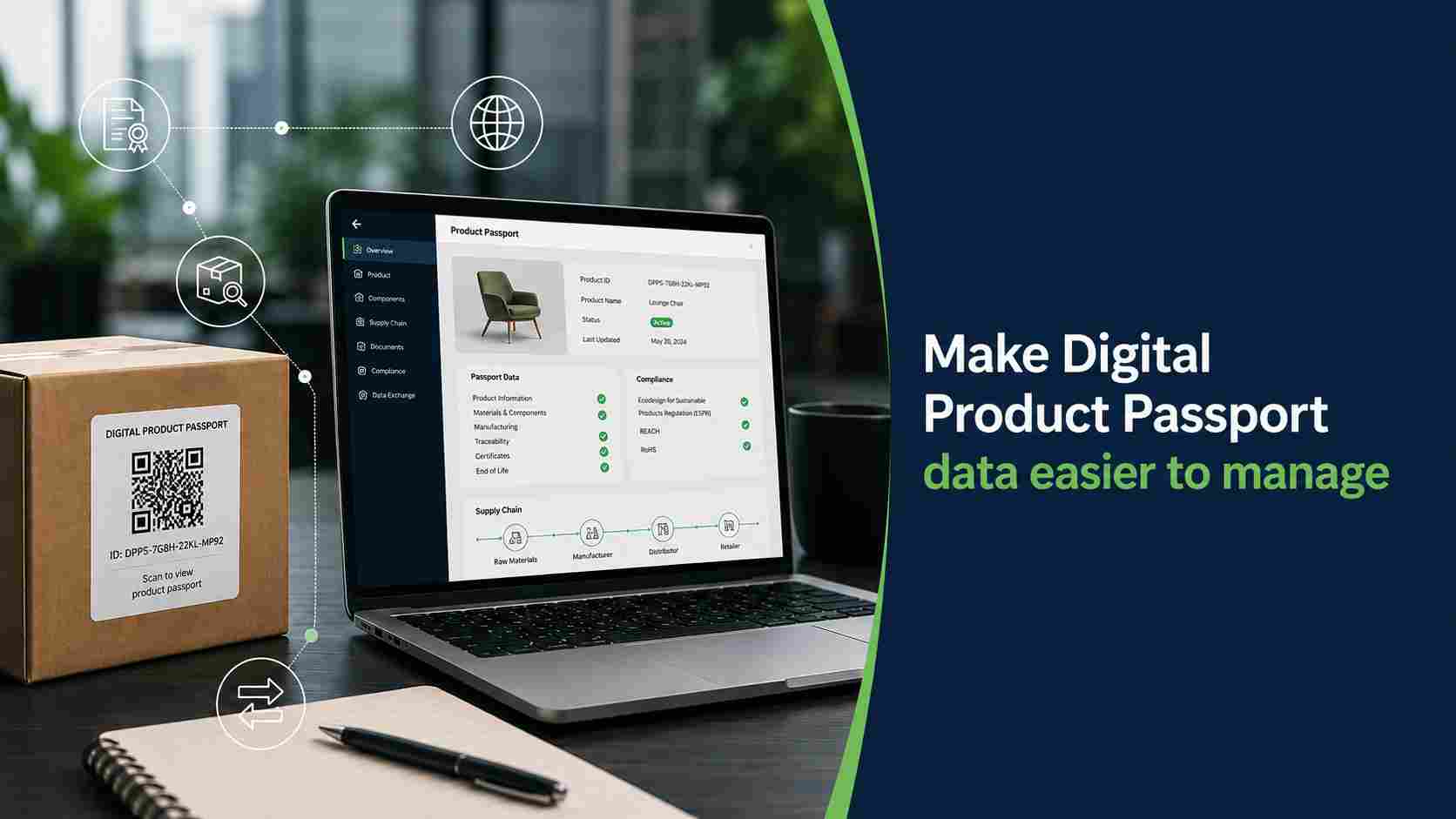
- Support Digital Product Passport and circular economy data readiness
The attached workshop also identifies ComplyMarket capabilities across product compliance management, sustainability reporting, material compliance, packaging compliance, Extended Producer Responsibility services, Digital Product Passport, and global market access.
For companies preparing for 2030 and 2035 recyclability milestones, the challenge is not only understanding the rules. The real challenge is organizing the data, evidence, workflows, supplier communication, and documentation needed to prove compliance.
ComplyMarket helps businesses move from scattered spreadsheets and supplier emails to a structured packaging compliance process that supports market access, sustainability, and regulatory readiness.

Comments
Leave a comment or ask a question
No comments yet.