Recycled Content in Plastic Packaging: PPWR Guide
Recycled content in plastic packaging is becoming a central compliance topic for companies placing packaged products on the EU market. Under the EU Packaging and Packaging Waste Regulation, known as the PPWR, businesses using plastic packaging will need to understand whether minimum recycled content targets apply, how those targets are calculated, what evidence is required, and how the information should be managed across suppliers, products, and markets.
This is not only a sustainability issue. It is a product compliance, packaging design, procurement, documentation, and market access issue.
Regulation (EU) 2025/40 on packaging and packaging waste entered into force on 11 February 2025 and will generally apply from 12 August 2026. The European Commission explains that the PPWR covers all packaging and packaging waste, regardless of material or origin, and sets requirements for manufacturing, composition, reusable or recoverable nature, waste management, and waste prevention. The Commission also states that the regulation aims to safely increase the use of recycled plastics in packaging and reduce the use of virgin materials.
For manufacturers, importers, distributors, retailers, online sellers, and packaging suppliers, this means plastic packaging data must become more detailed, structured, and evidence-based. Companies need to know what type of plastic packaging they use, whether it is contact-sensitive, whether it is a single-use plastic beverage bottle, what percentage of recycled content it contains, and whether exemptions apply.
The attached packaging compliance workshop identifies minimum recycled content in plastic packaging as a major compliance area. It covers 2030 and 2040 recycled content targets, exemptions, technical documentation, methodology and verification, financial contributions, possible adjustments or exemptions, and future review of non-plastic packaging.
Why Recycled Content in Plastic Packaging Matters
Plastic packaging is one of the biggest focus areas in packaging regulation because it uses significant raw materials, contributes to packaging waste, and can be difficult to manage in circular systems when it is not designed, collected, sorted, recycled, and documented correctly.
The PPWR is intended to support a circular economy by increasing recyclability, reducing unnecessary packaging, and increasing the use of recycled materials. The European Commission’s packaging waste page explains that packaging uses large quantities of primary raw materials and that increasing packaging waste, combined with low levels of reuse, collection, and recycling, is a barrier to a low-carbon, circular and resilient economy.
For businesses, recycled content matters because it affects:
|
Business Area |
Why It Matters |
|
Packaging design |
Plastic packaging may need to be redesigned to include recycled material |
|
Supplier management |
Suppliers must provide reliable recycled content evidence |
|
Procurement |
Recycled plastic availability, quality, and cost may affect sourcing |
|
Compliance |
Targets and exemptions must be assessed correctly |
|
Technical documentation |
Evidence must be stored and kept up to date |
|
EPR fees |
Recycled content may influence producer financial contributions |
|
Sustainability reporting |
Recycled content data supports circularity reporting |
|
Customer requirements |
Retailers and B2B customers may request proof |
|
Market access |
Non-compliant packaging may create future EU market risk |
Recycled content should therefore be treated as a controlled compliance data point, not only as a marketing claim.
What Does “Recycled Content” Mean in Plastic Packaging?
In practical packaging compliance, recycled content refers to the share of recycled material used in the plastic packaging. Under the PPWR approach, the focus is especially on recycled material recovered from post-consumer plastic waste.
The workshop describes recycled content targets for plastic packaging based on minimum percentages of recycled material from post-consumer plastic waste.
For compliance teams, the key questions are:
- What plastic packaging does the company use?
- Is the packaging contact-sensitive?
- Is the packaging made mostly of PET?
- Is it a single-use plastic beverage bottle?
- Does the packaging fall into another plastic packaging category?
- What percentage of recycled content does it contain?
- Is the recycled content post-consumer recycled content?
- Is supplier evidence available?
- Does an exemption apply?
- How will the percentage be calculated and verified?
This matters because different packaging categories have different targets. A single recycled content percentage cannot be applied across the entire packaging portfolio without category-level assessment.
PPWR Recycled Content Targets for 2030 and 2040
The workshop identifies different recycled content targets for 2030 and 2040 depending on the type of plastic packaging.
Recycled Content Targets Highlighted in the Workshop
|
Plastic Packaging Type |
2030 Target |
2040 Target |
|
Contact-sensitive packaging made mostly of PET |
30% |
50% for contact-sensitive plastic packaging, except single-use beverage bottles |
|
Contact-sensitive packaging made of plastics other than PET, excluding single-use beverage bottles |
10% |
50% for contact-sensitive plastic packaging, except single-use beverage bottles |
|
Single-use plastic beverage bottles |
30% |
65% |
|
Other plastic packaging |
35% |
65% |
These targets create several practical consequences.
First, companies need to classify packaging correctly. A food-contact PET tray, a cosmetics bottle, a beverage bottle, a medical packaging component, and a non-contact plastic transport packaging item may not be treated the same way.
Second, companies need supplier evidence. Recycled content percentages should be supported by documentation, not estimated informally.
Third, companies need to monitor methodology. The workshop notes that EU methodology and verification rules are part of the compliance process, and the European Commission’s official packaging page also highlights continuing implementation support, guidance, and FAQs for businesses and Member States.
2030 Targets: What Companies Need to Prepare
The 2030 recycled content targets are the first major milestone for plastic packaging. However, companies should not wait until 2030 to act. Packaging design, supplier sourcing, material qualification, product testing, artwork updates, cost analysis, and documentation can take significant time.
Practical 2030 Readiness Actions
|
Action |
Why It Matters |
|
Identify all plastic packaging |
Companies need to know which packaging is in scope |
|
Classify plastic packaging types |
Different packaging categories have different targets |
|
Check whether packaging is contact-sensitive |
Contact-sensitive packaging has specific target categories |
|
Identify PET and non-PET plastics |
PET-based and non-PET contact-sensitive packaging may differ |
|
Review beverage bottles separately |
Single-use plastic beverage bottles have specific targets |
|
Request supplier data |
Recycled content claims require evidence |
|
Assess availability of recycled plastic |
Sourcing may be limited for some applications |
|
Review product safety requirements |
Contact-sensitive uses may need additional controls |
|
Prepare technical documentation |
Evidence should be stored and traceable |
|
Monitor methodology |
Calculation and verification rules should be followed |
For many companies, the most difficult part will not be understanding the target percentage. The real challenge will be collecting reliable data from suppliers and proving that the recycled content used in packaging meets the required criteria.
2040 Targets: Why Long-Term Planning Matters
The 2040 targets are higher than the 2030 targets. This means companies should not design packaging only to meet the first milestone. Packaging strategies should be future-ready.
A plastic packaging format that barely meets the 2030 target may require another redesign or sourcing change before 2040. Businesses should therefore consider whether suppliers, packaging materials, and technical performance can support higher recycled content levels in the future.
2040 Planning Questions
|
Question |
Why It Matters |
|
Can the packaging supplier increase recycled content over time? |
Long-term sourcing stability is important |
|
Does higher recycled content affect packaging performance? |
Strength, barrier properties, color, odor, and safety may be affected |
|
Is recycled plastic available for the required application? |
Supply constraints may affect readiness |
|
Are food-contact or contact-sensitive requirements manageable? |
Sensitive applications may require stricter controls |
|
Will packaging lines need adjustment? |
Material changes can affect production |
|
Will customers accept appearance changes? |
Recycled content may affect color or clarity |
|
Can documentation scale across product families? |
Evidence management becomes more complex |
Companies that build recycled content requirements into procurement and packaging development now will be better prepared for future milestones.
Which Plastic Packaging Categories Need Special Attention?
Not all plastic packaging should be reviewed with the same priority. Companies should take a risk-based approach and begin with packaging categories that are high volume, consumer-facing, regulated, or technically complex.
High-Priority Plastic Packaging Categories
|
Packaging Category |
Why It Needs Attention |
|
PET contact-sensitive packaging |
2030 target applies and evidence is required |
|
Non-PET contact-sensitive packaging |
Lower 2030 target, but more technical complexity in some applications |
|
Single-use plastic beverage bottles |
Specific 2030 and 2040 targets apply |
|
Food-contact packaging |
Safety, quality, and recycled content controls may be challenging |
|
Cosmetics and personal care packaging |
Consumer-facing and often claim-sensitive |
|
E-commerce plastic packaging |
High volume and connected to packaging waste reduction |
|
Flexible plastic packaging |
May create sourcing and recyclability challenges |
|
Multi-layer plastic packaging |
More difficult to assess and document |
|
Recycled plastic packaging with claims |
Marketing claims must be supported |
|
Packaging used across multiple EU markets |
Country-level EPR and reporting data may also be needed |
Businesses should start with packaging that creates the highest compliance, customer, or market access risk.
Exemptions from Recycled Content Requirements
The PPWR includes exemptions for certain types of plastic packaging where recycled content may not be suitable or where product safety and quality requirements are particularly strict.
The workshop identifies the following examples of packaging that may be exempt from recycled content requirements:
- Immediate packaging used directly for medicines or veterinary products
- Plastic packaging for medical devices
- Plastic packaging for in vitro diagnostic devices
- Outer packaging for medicines where essential to preserve product quality
- Compostable plastic packaging
These exemptions are important, especially for healthcare, pharmaceutical, veterinary, medical device, and IVD companies.
However, exemptions should be used carefully. Companies should not assume an exemption applies without documenting why.
Exemption Documentation Checklist
|
Evidence Needed |
Practical Purpose |
|
Packaging description |
Identifies the packaging type and intended use |
|
Product category |
Shows whether the product is medicine, veterinary product, medical device, IVD, or other |
|
Reason for exemption |
Explains why the packaging falls under an exempt category |
|
Product quality or safety justification |
Supports exemption where packaging protects product quality |
|
Supplier evidence |
Supports material and packaging classification |
|
Regulatory assessment |
Shows internal review and approval |
|
Review date |
Ensures exemption status is reassessed when rules or packaging change |
Exempt packaging should still be tracked in the packaging compliance system. Even when a recycled content target does not apply, other PPWR obligations may still be relevant, such as labelling, documentation, substance restrictions, recyclability, minimization, EPR, and reporting.
Contact-Sensitive Plastic Packaging: Why It Is Complex
Contact-sensitive packaging is a key recycled content category because it may involve direct or indirect contact with products where safety, hygiene, stability, or quality matters.
Examples may include packaging for food, cosmetics, healthcare products, pharmaceuticals, and other sensitive applications, depending on the specific regulatory context and packaging design.
Contact-sensitive packaging requires special attention because recycled plastic must meet both circularity expectations and product safety requirements. The company must ensure that using recycled content does not compromise the product, create contamination risk, affect shelf life, or violate other applicable rules.
Practical Questions for Contact-Sensitive Packaging
|
Question |
Why It Matters |
|
Is the packaging in direct or indirect contact with the product? |
Determines whether contact-sensitive rules may apply |
|
Is the packaging made mostly of PET or another plastic? |
Different 2030 target categories may apply |
|
Is the recycled content suitable for the application? |
Safety and quality must be protected |
|
Are supplier declarations available? |
Evidence is needed for compliance |
|
Has the material been tested where needed? |
Sensitive uses may require additional validation |
|
Does recycled content affect performance? |
Barrier, strength, odor, color, and stability may change |
|
Is the packaging also food-contact regulated? |
Additional legal requirements may apply |
For contact-sensitive packaging, procurement and compliance teams should work closely with packaging engineers, quality teams, and suppliers before approving recycled plastic materials.
Recycled Content and Technical Documentation
Recycled content must be supported by documentation. Companies need to prove the percentage of recycled content, the source of the recycled material, the calculation method, and the evidence supporting the claim.
The workshop states that manufacturers must provide technical documentation to show packaging meets recycled content requirements and that methodology and verification are part of the compliance process.
What to Include in a Recycled Content Technical File
|
Documentation Element |
What It Should Show |
|
Packaging description |
Packaging type, product use, material and application |
|
Plastic category |
PET, non-PET, contact-sensitive, beverage bottle, other plastic |
|
Recycled content percentage |
Declared percentage in the packaging |
|
Recycled content source |
Evidence that the recycled material is post-consumer where required |
|
Supplier declaration |
Supplier statement supporting recycled content |
|
Calculation method |
How the percentage was calculated |
|
Verification evidence |
Certification, test report, audit record, or other evidence where available |
|
Exemption assessment |
Documentation if the packaging is exempt |
|
Product and market mapping |
Which products and countries the packaging relates to |
|
Version control |
Updates when packaging materials or suppliers change |
Technical documentation should be controlled and regularly reviewed. If the supplier, recycled material source, resin grade, packaging design, or production process changes, the evidence may need to be updated.
Recycled Content and Packaging Labelling
Recycled content can also affect packaging labelling and marketing claims. If a company communicates recycled content on packaging, in product descriptions, or in marketing materials, the claim should be accurate, specific, and supported by evidence.
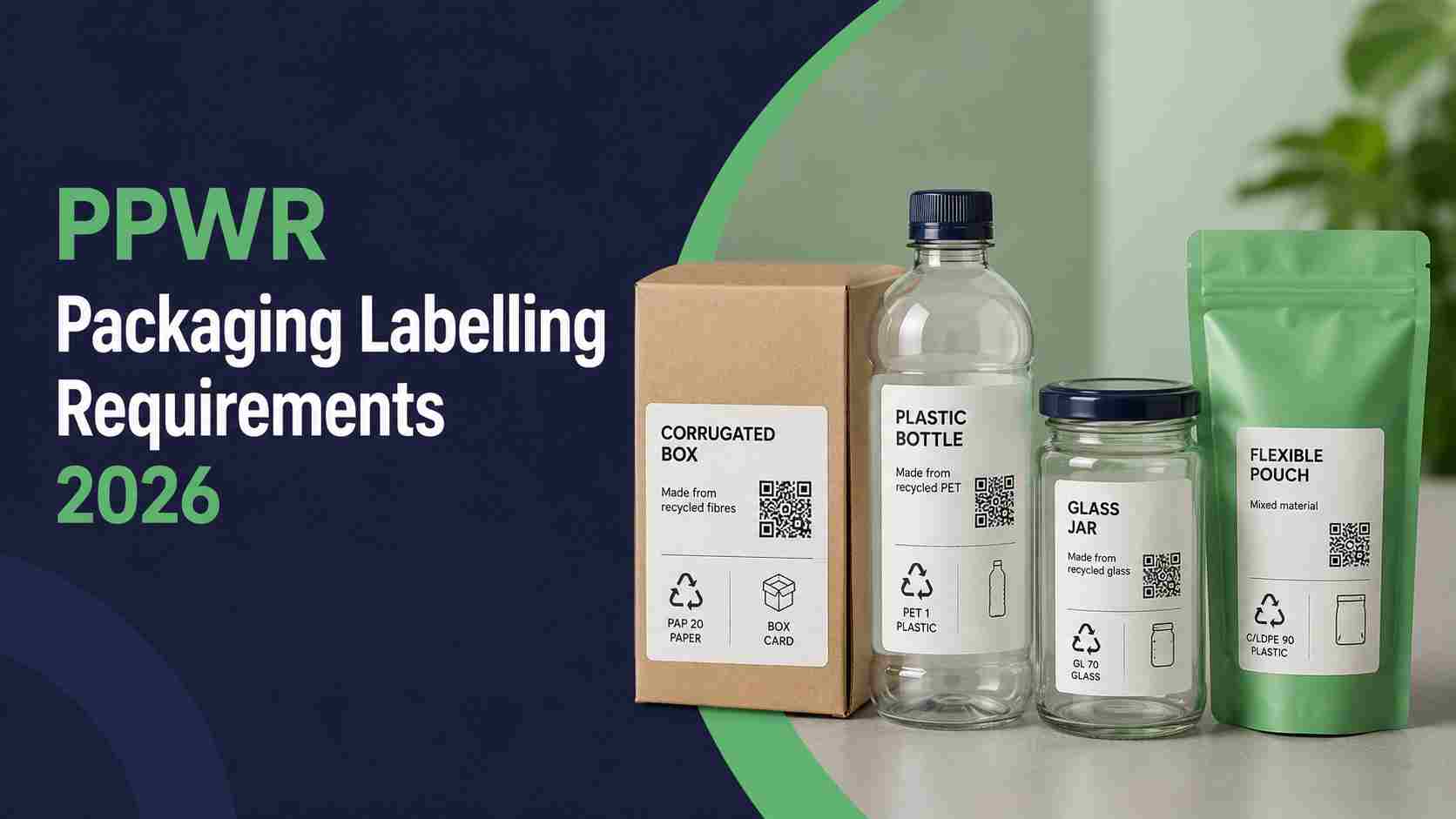
The workshop notes that plastic packaging may include labels showing compliance with recycled content targets and that labels must comply with EU specifications and methodology for verifying recycled content.
Claim Examples That Need Evidence
|
Claim Type |
Evidence Needed |
|
|
“Made with recycled plastic” |
Supplier declaration and percentage evidence |
|
|
“Contains 30% recycled plastic” |
Calculation method and verification evidence |
|
|
“Made with post-consumer recycled plastic” |
Source evidence for post-consumer material |
|
|
“Sustainable packaging” |
Specific evidence, not vague marketing language |
|
|
“Circular packaging” |
Evidence of recycled content, recyclability, or reuse system |
|
|
“Reduced virgin plastic” |
Baseline comparison and material data |
|
Businesses should avoid vague claims that cannot be verified. Claims should be aligned with legal requirements, technical evidence, and consumer clarity.
Recycled Content and EPR Fee Modulation
Recycled content may also affect producer financial contributions under Extended Producer Responsibility schemes. The workshop notes that by 2030, producers’ financial contributions under EPR schemes may depend on how much recycled content their packaging contains.
This means recycled content can influence not only compliance status but also cost.
Why EPR Fee Modulation Matters
|
Area |
Business Impact |
|
Packaging cost |
Recycled content may affect material cost and EPR fees |
|
Supplier selection |
Suppliers with reliable recycled content evidence may become more valuable |
|
Product margins |
Packaging compliance costs may affect profitability |
|
Sustainability performance |
Recycled content can support circular economy goals |
|
Reporting accuracy |
Incorrect data may affect fee calculations |
|
Customer expectations |
Retailers may prefer packaging with stronger circularity evidence |
Companies should therefore include recycled content data in their EPR reporting preparation and packaging cost analysis.
Recycled Content and Supplier Management
Recycled content compliance depends heavily on supplier cooperation. Many companies do not manufacture their own packaging materials, so they rely on packaging suppliers, converters, resin suppliers, and recycled material suppliers for data.
Supplier Data Companies Should Request
|
Supplier Data |
Why It Matters |
|
Material type |
Determines packaging category |
|
Recycled content percentage |
Needed for target assessment |
|
Post-consumer recycled content evidence |
Supports PPWR compliance |
|
Recycled material source |
Helps verify origin and quality |
|
Certification or verification |
Provides stronger evidence |
|
Batch or production information |
Supports traceability |
|
Food-contact or contact-sensitive suitability |
Important for sensitive packaging |
|
Substance declarations |
Recycled material may introduce substance concerns |
|
Change notification process |
Ensures evidence remains current |
Supplier agreements should include obligations to provide updated packaging data and notify the company when material composition, recycled content percentage, source, or certification changes.
Recycled Content and Substance Compliance
Recycled plastic can support circularity, but it may also introduce substance management challenges. Depending on the source and quality control process, recycled plastics may have more variability than virgin materials.
Companies should review recycled content together with substance compliance, especially for packaging used in sensitive applications.
Substance Topics to Review
|
Topic |
Why It Matters |
|
Restricted substances |
Recycled inputs may contain substances that require assessment |
|
PFAS |
Coatings or previous uses may create potential risks in some materials |
|
Heavy metals |
Packaging material compliance should still be verified |
|
NIAS |
Non-intentionally added substances may be relevant for some applications |
|
Food-contact safety |
Sensitive packaging may require specific regulatory controls |
|
Odor and migration |
Recycled materials may affect product quality or safety |
|
Supplier controls |
Quality systems are needed to manage recycled material variability |
The goal is not to avoid recycled plastic. The goal is to use recycled plastic responsibly, with the right evidence, controls, and documentation.
Common Mistakes Companies Should Avoid
Many recycled content compliance gaps happen because companies treat recycled content as a general sustainability statement instead of a controlled compliance requirement.
|
Mistake |
Why It Creates Risk |
|
Not classifying plastic packaging correctly |
Targets differ by category |
|
Estimating recycled content without evidence |
Claims may be unsupported |
|
Not distinguishing PET and non-PET packaging |
Target categories may differ |
|
Ignoring contact-sensitive status |
Safety and target requirements may be different |
|
Assuming supplier claims are enough |
Evidence should be documented and reviewed |
|
Not tracking post-consumer recycled content |
PPWR focuses on recycled material from post-consumer plastic waste |
|
Applying exemptions without justification |
Exemptions must be documented |
|
Forgetting labels and claims |
On-pack statements must be supported |
|
Not updating data after supplier changes |
Technical documentation may become outdated |
|
Managing data in spreadsheets only |
Reporting and evidence control become difficult at scale |
A strong recycled content compliance process should connect packaging design, procurement, supplier management, technical documentation, regulatory review, and EPR reporting.
Practical Recycled Content Readiness Roadmap
Companies can use the following roadmap to prepare for recycled content requirements under PPWR.
Step 1: Build a plastic packaging inventory
List every plastic packaging item used across products, suppliers, and markets.
Step 2: Classify packaging categories
Identify PET contact-sensitive packaging, non-PET contact-sensitive packaging, single-use plastic beverage bottles, other plastic packaging, and potential exempt packaging.
Step 3: Map packaging to products and countries
Connect each packaging type to SKUs, product families, suppliers, production sites, and EU markets.
Step 4: Request supplier evidence
Ask suppliers for recycled content percentage, post-consumer recycled content evidence, declarations, certifications, and change notification commitments.
Step 5: Assess target gaps
Compare current recycled content levels against 2030 and 2040 target categories.
Step 6: Review technical feasibility
Assess whether higher recycled content affects performance, safety, contact-sensitive requirements, packaging line compatibility, or customer expectations.
Step 7: Prepare technical documentation
Create a technical file that includes material data, calculations, declarations, evidence, exemptions, and version control.
Step 8: Review labels and claims
Make sure any recycled content statement is accurate, specific, and evidence-based.
Step 9: Connect recycled content to EPR data
Include recycled content as part of packaging data management and fee-modulation readiness.
Step 10: Monitor PPWR implementation
Follow EU methodology, verification requirements, guidance, and future updates as they develop.
Recycled Content Compliance Checklist
|
Question |
Status |
|
Have all plastic packaging items been identified? |
To be checked |
|
Has each packaging item been classified by category? |
To be checked |
|
Is contact-sensitive packaging identified? |
To be checked |
|
Are PET and non-PET packaging separated? |
To be checked |
|
Are single-use plastic beverage bottles identified? |
To be checked |
|
Is current recycled content percentage known? |
To be checked |
|
Is the recycled content post-consumer where required? |
To be checked |
|
Is supplier evidence available? |
To be checked |
|
Is an exemption being claimed? |
To be checked |
|
Is exemption evidence documented? |
To be checked |
|
Are labels and claims supported? |
To be checked |
|
Is technical documentation complete? |
To be checked |
|
Is EPR data connected to recycled content data? |
To be checked |
|
Are 2030 and 2040 gaps identified? |
To be checked |
This checklist can support compliance reviews, supplier onboarding, packaging redesign, and annual packaging data updates.
How ComplyMarket Supports Recycled Content Compliance
Recycled content compliance under PPWR requires accurate data, supplier evidence, technical documentation, version control, and market-specific visibility. For companies with multiple packaging suppliers, product families, and EU markets, managing this manually can become difficult.
ComplyMarket supports companies with packaging compliance management across jurisdictions by helping centralize records, manage documentation, improve visibility, control versions, and support structured reporting. ComplyMarket’s packaging compliance services describe support for packaging specifications, supplier declarations, test reports, labelling records, registration evidence, and packaging reporting data.
ComplyMarket can help companies prepare for recycled content requirements by supporting:
- Plastic packaging inventory management
- Packaging category classification
- Supplier recycled content evidence collection
- Post-consumer recycled content documentation
- Technical file and declaration management
- Version control for material or supplier changes
- Packaging BoM and component-level data tracking
- Substance compliance evidence for recycled materials
- EPR reporting data preparation
- Country-specific packaging compliance visibility
- Audit-ready records for internal and external reviews
- Digital Product Passport and circular economy data readiness
The attached workshop also identifies ComplyMarket capabilities across product compliance management software, sustainability reporting software, material compliance software, packaging compliance, EPR services, Digital Product Passport, and global market access.
For businesses preparing for 2030 and 2040 recycled content targets, the challenge is not only finding recycled plastic. The bigger challenge is proving compliance across suppliers, packaging categories, products, markets, and reporting systems.
ComplyMarket helps companies move from scattered supplier emails and spreadsheets to a structured, traceable, and scalable packaging compliance process.


Comments
Leave a comment or ask a question
No comments yet.