France AGEC Law Guide for Businesses Updated 2026
France’s Anti-Waste for a Circular Economy Law, known as the AGEC Law, has become one of the most important compliance frameworks for companies placing products on the French market. It affects EPR registration, packaging, consumer sorting labels, environmental product information, plastic reduction, repairability, durability, reuse, and evidence management.
For manufacturers, importers, retailers, marketplaces, and e-commerce sellers, the main question is no longer simply: “What is the AGEC Law?”
The real question is:
“Does AGEC apply to my products, and can I prove compliance before selling in France?”
The France AGEC Law was adopted as Law No. 2020-105 of 10 February 2020. The French Ministry states that the law aims to accelerate the transition from a linear “produce, consume, discard” model to a circular economy model that reduces waste and preserves natural resources, biodiversity, and the climate.
For businesses, AGEC compliance is not only a legal requirement. It is also a market-access, product-data, supplier-management, labeling, and audit-readiness challenge.
What Is the France AGEC Law?
The France AGEC Law is France’s anti-waste and circular economy law. It introduces obligations designed to reduce waste, improve consumer information, extend product life, fight planned obsolescence, encourage reuse, and strengthen producer responsibility.
In practice, the AGEC Law can affect:
- Extended Producer Responsibility, known in France as REP/EPR.
- French IDU numbers for producers.
- Triman and Info-tri sorting labels.
- Environmental product information under Article 13 / QCE.
- Packaging reduction and reuse strategies.
- Plastic packaging restrictions and long-term reduction targets.
- Repairability and durability information.
- Unsold non-food product handling.
- Environmental claims and greenwashing controls.
This means that AGEC compliance is not limited to one department. It usually involves regulatory affairs, product compliance, packaging, sustainability, procurement, legal, marketing, quality, and supply chain teams.
Does the France AGEC Law Apply to Your Company?
Your company may have France AGEC obligations if you manufacture, import, distribute, sell online, sell through marketplaces, or place products or packaging on the French market.
This includes non-French companies selling into France. A company outside France may still be considered responsible if it places covered products or packaging on the French market.
AGEC and French EPR obligations are especially relevant for companies selling:
- Packaging.
- Electrical and electronic equipment.
- Batteries.
- Textiles, clothing, footwear, and household linen.
- Furniture.
- Toys.
- Sports and leisure goods.
- DIY and garden products.
- Construction products and materials.
- Chemical products.
- Sanitary textiles.
- Other products covered by French REP/EPR streams.
French EPR schemes are based on the principle that producers placing certain products on the market may be responsible for financing or organizing prevention and waste management for those products at end of life.
For potential clients, the key issue is simple: if your product or packaging is in scope, you need a structured way to identify the obligation, collect the right data, register where required, label correctly, report accurately, and retain evidence.
Latest France AGEC Law Compliance Updates
1- Professional Packaging EPR Is Now a Major Priority
France has expanded packaging EPR beyond household packaging. The French Ministry confirms that EPR for professional packaging applies in stages: restaurant packaging from 1 January 2023 and other professional packaging, also known as industrial and commercial packaging, from 1 January 2025.
This is important for B2B companies because packaging compliance in France is no longer only about consumer packaging. Transport packaging, industrial packaging, commercial packaging, and packaging used by professionals may now require additional data, classification, reporting, and evidence.
For businesses, this creates practical questions:
Which packaging do we place on the French market?
Is it household, professional, restaurant, industrial, or commercial packaging?
Do we have the data needed for EPR declarations?
Can we prove our registration and reporting status?
2- IDU Numbers Remain Essential Proof of French EPR Compliance
The French Identifiant Unique, or IDU, is a unique identifier linked to EPR registration. ADEME states that since 1 January 2022, each producer subject to an EPR stream must have a unique identifier for each relevant stream, and that the IDU proves the producer’s compliance with the relevant REP stream and approval categories.
This is one of the most common AGEC compliance gaps.
A company may have an IDU for packaging but not for another product stream. Another company may rely on a supplier, distributor, marketplace, or importer without clearly documenting who is legally responsible.
Businesses should therefore verify:
- Which legal entity is the producer for France.
- Which EPR streams apply.
- Whether the correct IDU exists for each stream.
- Whether the IDU is documented and traceable.
- Whether the IDU is linked to the right products, packaging, and declarations.
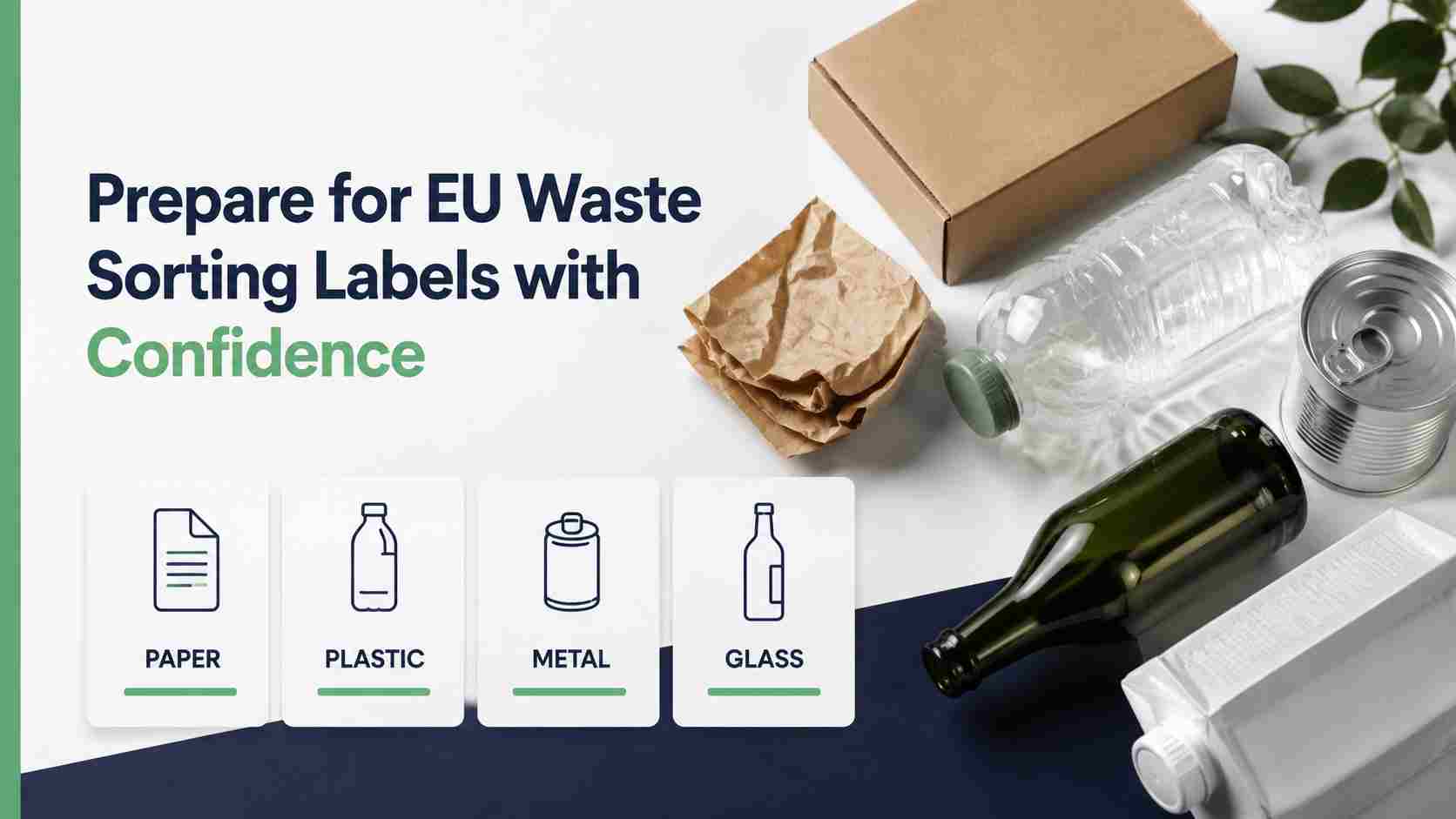
3- Triman and Info-tri Labeling Require Strong Artwork Control
The Triman logo and Info-tri sorting information are central to French consumer sorting requirements.
The French Ministry explains that Info-tri gives consumers clear instructions on where to sort products, used items, and packaging, such as a sorting bin, recycling center, collection point, store, or other appropriate channel.
For businesses, this is not only a label-design issue. It is a compliance-control issue.
Companies need to know:
- Which products and packaging require Triman and Info-tri.
- Which EPR stream’s sorting instructions apply.
- Which artwork version is approved.
- Whether the label is correctly placed on packaging, product documentation, or digital channels.
- Whether obsolete packaging artwork has been phased out.
- Whether there is evidence of internal review and approval.
A simple artwork mistake can become a market-access, customer, or inspection problem.
4- Article 13 / QCE Product Information Is a High-Risk Data Requirement
Article 13 of the AGEC Law introduced consumer information obligations for the qualities and environmental characteristics of waste-generating products, often referred to as QCE information.
The French Ministry explains that Article 13 aims to provide consumers with clearer, more understandable, and more sincere information about environmental qualities and characteristics, while also framing environmental claims.
Depending on the product, QCE information may relate to characteristics such as recycled content, recyclability, repairability, durability, compostability, reuse possibilities, presence of hazardous substances, presence of precious metals, or presence of rare earths.
The key challenge is that companies need reliable product-level data. Marketing statements are not enough. Businesses need supplier declarations, technical evidence, product data, and controlled wording.
For companies selling many SKUs, this quickly becomes difficult to manage in spreadsheets.
5- Durability Index Replaced Repairability Index for Certain Products
France introduced the repairability index to help consumers understand how repairable certain products are. In 2025, France began replacing the repairability index with a durability index for certain categories.
The French Ministry states that the durability index replaced the repairability index for televisions from 8 January 2025 and washing machines from 8 April 2025. The durability index includes additional criteria, including product reliability.
Companies selling covered electrical and electronic products in France should check whether their products still require the repairability index or whether the durability index now applies.
This requires coordination between product compliance, technical teams, suppliers, and customer-facing sales channels.
6- Plastic Packaging Reduction Remains a Long-Term Compliance Driver
The AGEC Law includes France’s objective to end the placing on the market of single-use plastic packaging by 2040. France’s national 3R strategy focuses on reduction, reuse, and recycling of single-use plastic packaging.
For companies, this means packaging compliance is moving beyond registration and reporting. Businesses increasingly need packaging data that supports strategic decisions on:
- Material reduction.
- Reuse and refill models.
- Recyclability.
- Packaging redesign.
- Plastic substitution.
- Evidence for environmental claims.
This is especially important for brands with complex packaging portfolios or frequent packaging changes.
7- Textile Environmental Cost Labeling Adds Pressure on Product Data
Textile companies should also monitor France’s environmental cost labeling framework for clothing. The French Ministry states that environmental labeling for clothing is being deployed from autumn 2025 to show the environmental impact of garments.
A later Ministry announcement states that from 1 October 2025, textile companies have the possibility to display the environmental cost of clothing using a simple label.
This measure is not exactly the same as AGEC Article 13, but it is highly relevant for textile brands selling in France because it increases the need for product-level environmental data, traceability, and evidence.
8- PFAS Restrictions Add Another Product Compliance Layer
France’s PFAS law is separate from the AGEC Law, but it matters for companies managing French product compliance.
The French Ministry states that the Law of 27 February 2025 establishes the principle of banning PFAS use in cosmetics, ski waxes, and textiles, with exceptions for certain specific textile uses.
The implementing decree states that relevant provisions entered into force on 1 January 2026, and that products containing PFAS and manufactured before that date may be placed on the market or exported for a maximum of twelve months from 1 January 2026; after that period, placing them on the market or exporting them is prohibited.
This is a good example of why companies should not manage AGEC in isolation. Product compliance in France increasingly requires connected control of EPR, packaging, consumer information, environmental claims, and restricted substances.
9- EU PPWR Will Interact With French Packaging Compliance
The EU Packaging and Packaging Waste Regulation, Regulation (EU) 2025/40, entered into force on 11 February 2025 and will generally apply from 12 August 2026. The European Commission states that the regulation covers all packaging and packaging waste, regardless of material or origin, and sets requirements for manufacturing, composition, reusable or recoverable nature, waste management, and waste prevention.
For companies selling in France, this means packaging compliance should be managed at both French and EU levels. French EPR and AGEC obligations remain important, but they now need to fit into a broader EU packaging compliance strategy.
Key France AGEC Requirements for Businesses
A company preparing for France AGEC compliance should focus on these core obligations.
1. EPR and REP Applicability Assessment
Companies must determine whether their products or packaging fall under a French EPR stream. This requires product classification, packaging classification, sales-channel review, and legal-entity responsibility mapping.
2. IDU Registration and Documentation
If the company is considered a producer under a relevant EPR stream, it may need an IDU number. Since one company can have obligations under multiple streams, IDU tracking should be managed by legal entity, product category, stream, and evidence source.
3. Triman and Info-tri Labeling
Companies must check whether products or packaging require Triman and Info-tri sorting instructions. They also need a controlled process for artwork approval, implementation, and version history.
4. Article 13 / QCE Consumer Information
Where applicable, companies must publish environmental qualities and characteristics information for covered products. This requires structured product data, supplier evidence, validated claims, and controlled consumer-facing wording.
5. Packaging Data and EPR Reporting
Packaging teams need reliable data on materials, weights, units placed on the market, packaging type, recyclability, reuse, and relevant EPR categories.
6. Repairability and Durability Information
For covered electrical and electronic products, companies must verify whether a repairability index or durability index applies and ensure that the correct information is calculated, displayed, and retained.
7. Environmental Claims Governance
AGEC is connected to stronger control of environmental information and claims. Businesses should avoid unsupported claims such as “recyclable,” “eco-friendly,” “sustainable,” or “plastic-free” unless they have the evidence and wording required.
8. Unsold Goods Traceability
Companies should document how unsold non-food goods are managed, including reuse, donation, recycling, or other compliant routes where applicable.
France AGEC Compliance Checklist
Use this checklist to assess whether your company is ready.
|
Compliance Area |
Key Question |
|
Product scope |
Do we know which products are sold in France? |
|
Packaging scope |
Do we know which packaging types are placed on the French market? |
|
EPR streams |
Have we mapped all relevant French REP/EPR streams? |
|
Producer responsibility |
Do we know which legal entity is responsible? |
|
IDU number |
Do we have the correct IDU for each applicable stream? |
|
Triman and Info-tri |
Are sorting labels correct and approved? |
|
Article 13 / QCE |
Is environmental product information complete and evidence-based? |
|
Packaging reporting |
Do we have declaration-ready packaging data? |
|
Repairability / durability |
Have we checked whether an index applies? |
|
Claims |
Are environmental claims substantiated? |
|
Supplier data |
Do we have supplier declarations and supporting documents? |
|
Evidence |
Can we prove compliance during an inspection or customer request? |
Common AGEC Compliance Mistakes
Many companies underestimate AGEC because they treat it as a labeling or recycling topic. In reality, AGEC compliance requires ongoing product data and evidence management.
Common mistakes include:
- Assuming AGEC applies only to French companies.
- Registering for packaging EPR but missing other EPR streams.
- Having an IDU number but not linking it to the right product scope.
- Using outdated Triman or Info-tri artwork.
- Publishing Article 13 information without supplier evidence.
- Making environmental claims without technical substantiation.
- Managing packaging data manually across disconnected spreadsheets.
- Forgetting B2B or professional packaging obligations.
- Treating PFAS, PPWR, EPR, and AGEC as separate workflows.
- Not keeping audit-ready records.
For companies with large product portfolios, these mistakes can create delays, customer escalations, marketplace issues, incorrect declarations, and regulatory exposure.
Why AGEC Compliance Is Difficult to Manage Manually
AGEC compliance becomes complex because it depends on many changing data points:
- Product category.
- Packaging composition.
- Market placement date.
- Legal entity.
- Supplier evidence.
- EPR stream.
- Labeling obligation.
- Consumer information requirement.
- Environmental claim wording.
- Product lifecycle information.
- Reporting period.
A spreadsheet may work for a small number of products, but it becomes risky when a company manages multiple brands, suppliers, packaging formats, countries, and sales channels.
The biggest risk is not only missing a requirement. It is being unable to prove why a product was considered compliant at the time it was placed on the market.
How ComplyMarket Helps With France AGEC Law Compliance
ComplyMarket helps companies manage France AGEC compliance in a structured, scalable, and evidence-based way.
ComplyMarket’s France AGEC Law Compliance service is positioned around requirements such as REP/EPR, Triman and Info-tri, Article 13 / L541-9-1 digital environmental product information, environmental and plastic-claim controls, packaging reduction trajectory, and controls on unsold goods.
ComplyMarket’s product compliance management solution focuses on making product compliance structured, provable, and scalable by helping companies identify applicable laws, standards, and regulatory requirements, then manage the evidence, decisions, and documentation needed before placing products on the market.
For France AGEC compliance, ComplyMarket can help companies:
Identify Applicable AGEC and EPR Requirements
ComplyMarket helps teams assess which French AGEC, REP, EPR, labeling, packaging, and product information requirements may apply to each product or packaging type.
Centralize Product and Packaging Data
Instead of managing product data, packaging data, supplier declarations, and compliance decisions in scattered spreadsheets, companies can centralize information in one structured compliance workflow.
Manage IDU and EPR Evidence
ComplyMarket supports better traceability of EPR registration status, IDU documentation, producer responsibility, and stream-by-stream evidence.
Control Triman and Info-tri Labeling
ComplyMarket can help teams manage label applicability, artwork approvals, version control, supporting evidence, and internal review workflows.
Improve Packaging EPR Reporting Readiness
ComplyMarket’s France packaging EPR service states that it supports registration readiness, IDU documentation, declaration-grade reporting, and end-to-end traceability.
Reduce Risk From Unsupported Environmental Claims
By connecting claims to evidence, ComplyMarket helps companies reduce the risk of inaccurate or unsupported environmental communication.
Stay Inspection-Ready
ComplyMarket helps companies maintain audit-ready records, including decisions, evidence, approvals, data sources, documentation, and compliance history.
For compliance teams, this means fewer disconnected files, fewer last-minute evidence requests, fewer unclear responsibilities, and a stronger ability to prove compliance when customers, authorities, marketplaces, or internal stakeholders ask for documentation.
Who Benefits Most From ComplyMarket’s AGEC Compliance Support?
ComplyMarket is especially useful for companies that:
- Sell products or packaging in France.
- Manage many SKUs or product families.
- Work with multiple suppliers.
- Sell through e-commerce or marketplaces.
- Need EPR and packaging reporting support.
- Need to manage Triman and Info-tri labels.
- Need Article 13 / QCE environmental product information.
- Need to substantiate environmental claims.
- Want to reduce spreadsheet-based compliance risk.
- Need audit-ready documentation for French market access.
France AGEC Law Compliance FAQs
What is the France AGEC Law?
The France AGEC Law is France’s Anti-Waste for a Circular Economy Law. It aims to reduce waste, improve consumer information, support reuse and repair, reduce single-use plastic, strengthen producer responsibility, and move France toward a circular economy.
Who must comply with the France AGEC Law?
Manufacturers, importers, distributors, online sellers, marketplaces, and brands placing covered products or packaging on the French market may have AGEC or French EPR obligations.
What is an IDU number in France?
An IDU number is a unique identifier that proves a producer is registered for a relevant French EPR stream. Since 1 January 2022, producers subject to an EPR stream must have an IDU for each relevant stream.
What are Triman and Info-tri?
The Triman logo indicates that a product or packaging is subject to sorting rules, while Info-tri provides practical sorting instructions for consumers. The French Ministry describes Info-tri as a clear indication that helps consumers know where to sort used products and everyday waste.
Does AGEC apply to packaging?
Yes. Packaging is a major part of France’s circular economy and EPR framework. Professional packaging is now also a major compliance topic, with EPR applying to restaurant packaging from 1 January 2023 and other professional packaging from 1 January 2025.
Is the durability index part of France AGEC compliance?
The durability index is part of France’s consumer information framework linked to circular economy objectives. In 2025, it replaced the repairability index for televisions and washing machines.
How can ComplyMarket help with France AGEC Law compliance?
ComplyMarket helps companies assess AGEC and EPR applicability, manage product and packaging data, organize IDU and EPR evidence, control Triman and Info-tri labeling, structure Article 13 / QCE information, support packaging EPR reporting readiness, manage compliance documentation, and stay inspection-ready.
Comments
Leave a comment or ask a question
No comments yet.